Across Berlin, Paris and Stockholm, conversations that once sounded theoretical are turning into hard choices about who builds Europe’s next generation of combat aircraft, and on whose terms.
Saab signals it is ready for a new fighter partnership with Airbus
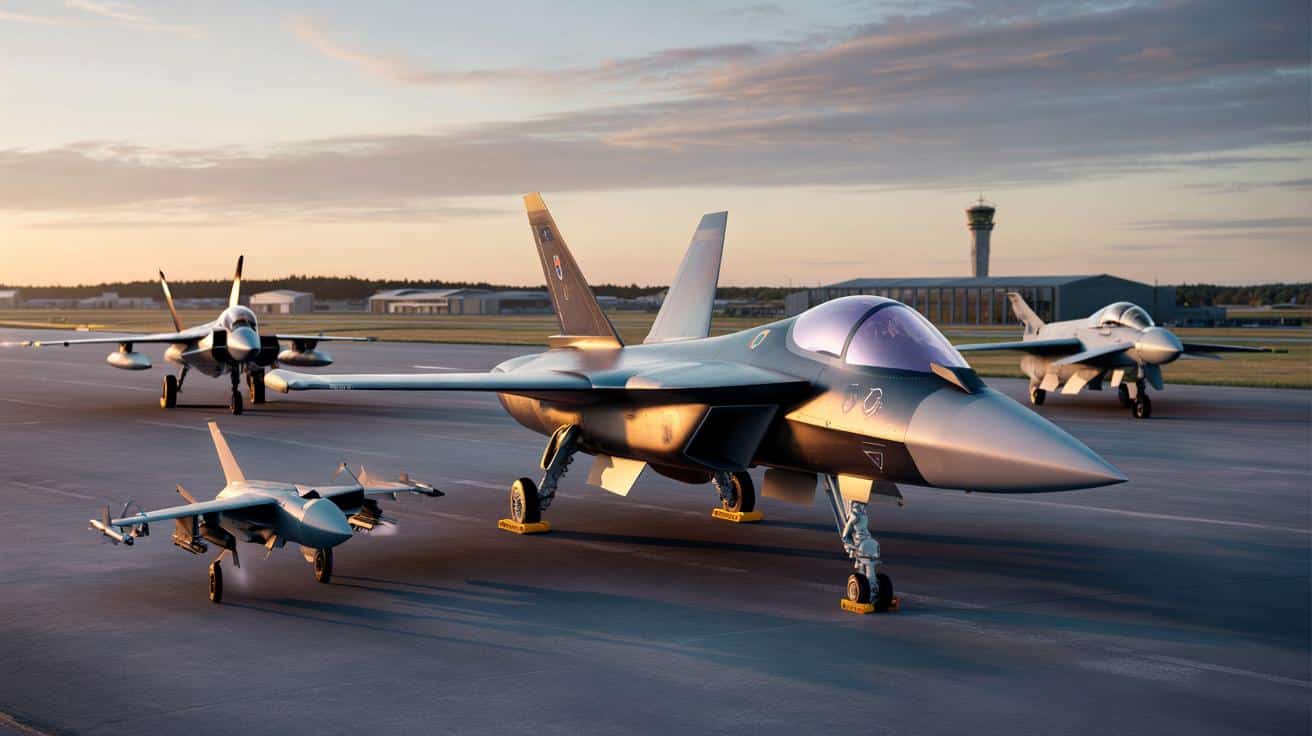
Sweden’s Saab has publicly opened the door to a major tie-up with Airbus to design and build a new fighter jet, if the troubled Franco-German-Spanish Future Combat Air System (SCAF/FCAS) project runs aground.
In an interview with German daily Frankfurter Allgemeine Zeitung, Saab chief executive Micael Johansson said the company was “ready” to cooperate with German industry on a common fighter, provided the political backing is clear and Stockholm can preserve its own design independence.
Saab is positioning itself as a ready-made partner for Germany and Airbus if the current Franco-German project fails to take off.
The comments come as Berlin quietly looks for a “plan B” for its future combat aircraft, amid long-running disagreements with Paris over governance, industrial shares and intellectual property in SCAF.
Future Combat Air System deadlock pushes Berlin to look elsewhere
The SCAF programme, launched with fanfare as a flagship symbol of European defence integration, is supposed to deliver a New Generation Fighter (NGF) to replace France’s Rafale and Germany’s Eurofighter from around 2040.
France’s Dassault Aviation was designated overall lead for the fighter, with Airbus representing German and Spanish interests. That setup has been contested in Berlin for years.
Former German chancellor Angela Merkel already signalled discomfort in 2021, challenging the initial “best athlete” principle, which aimed to pick the company with the strongest technical solution rather than spreading work politically.
Since then, tough negotiations over who does what, who owns what, and who leads which work packages have slowed the project to a crawl. It took roughly two years just to secure agreement on “phase 1B”, a key early development stage. Talks over phase 2 and long-term governance remain stuck.
➡️ “I’m a hairdresser and here’s my best advice for 50-year-old women who want short hair”
➡️ US Space Command Taps SpaceX for Missile Warning, Tracking Satellites
➡️ Spain confirms order for 30 Turkish Hürjet training jets worth €2.6 billion
Despite high-level pressure from Chancellor Friedrich Merz and President Emmanuel Macron, SCAF still has no clear roadmap beyond its current phase.
By the end of December, the German government publicly acknowledged that no definitive decision had been reached on the continuation of SCAF this year, despite earlier political promises.
Germany’s search for a plan B: GCAP, Sweden – or both?
Reports in autumn already suggested that Germany was studying alternatives should SCAF collapse or drag on for too long. Two obvious paths are emerging:
- Joining the UK–Italy–Japan Global Combat Air Programme (GCAP)
- Launching a new collaboration with Sweden and Saab, anchored around Airbus
GCAP, led by London, Rome and Tokyo, is a direct competitor to SCAF, with its own sixth-generation fighter concept. Joining it would give Germany access to a different industrial and political club, but would also raise questions about overlapping commitments and Europe’s strategic autonomy.
The alternative would be to build a northern-European axis with Sweden, with Airbus Defence & Space as a central industrial player and Saab as design partner. Johansson’s remarks point squarely in that direction.
What Saab wants from a fighter partnership
Johansson has laid out two key conditions for any deep cooperation with Airbus and Germany on a future fighter aircraft.
| Condition | What Saab insists on |
|---|---|
| Political commitment | Clear, long-term backing from both governments before starting a joint fighter programme. |
| Industrial independence | Saab must remain able to design and build fighters on its own, without giving away half its core capabilities. |
Johansson stressed that cooperation should not leave either side totally dependent on the other. He suggested that Berlin likely shares that view, given Germany’s own desire to maintain a robust aerospace base and avoid over-reliance on foreign partners.
For Saab, partnership must mean sharing know‑how while preserving the ability to design and build fighters independently.
On technology and intellectual property, Saab’s boss argued for transparency rather than tight protectionism. Each company should focus on its strengths, he said, and both should retain full access to the combined know‑how after the programme.
Drones as a first step: Saab and Airbus already talking
Interestingly, the potential fighter collaboration would not start with a jet at all, but with drones.
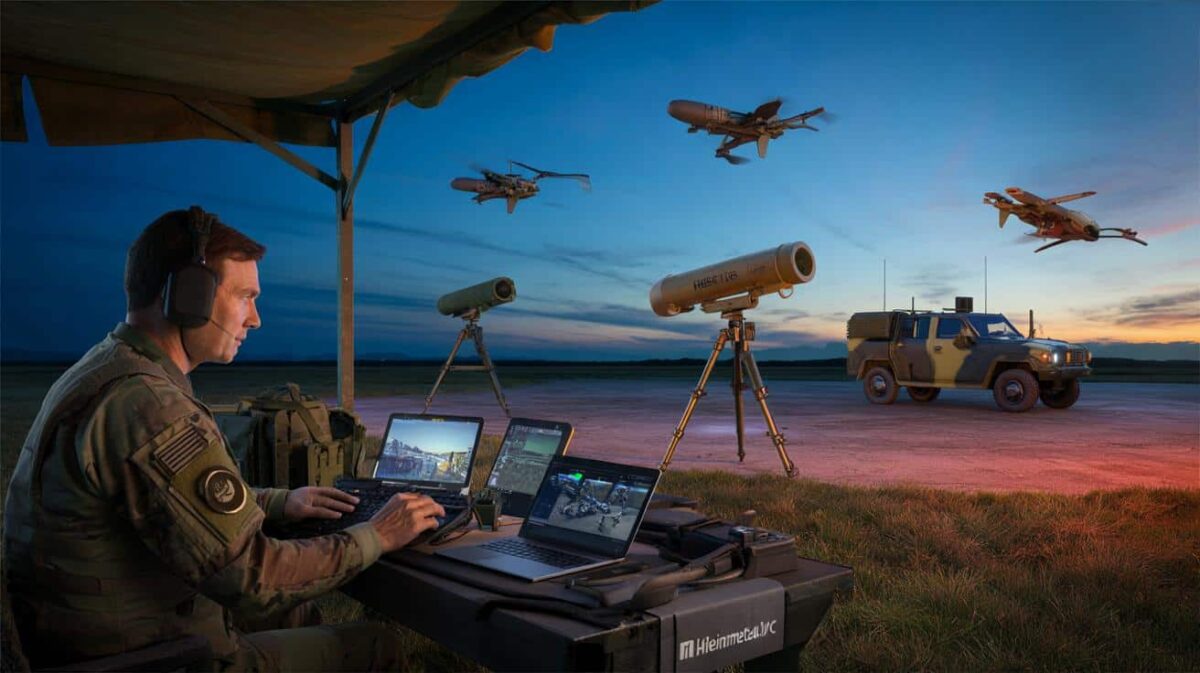
In December, Saab and Airbus announced their intention to cooperate on so‑called “collaborative combat aircraft” – drones designed to operate alongside manned fighters, sharing data and taking on high-risk missions.
Industry sources quoted by Reuters suggested this drone partnership could act as a catalyst for a much broader cooperation, particularly if SCAF runs into a dead end.
Johansson, for his part, sees unmanned systems as the logical first step. He estimated it would take “certainly ten years” to develop a new fighter aircraft, but only four to five years to field advanced combat drones.
Saab argues that teaming up on drones first could deliver tangible capability within five years and pave the way for a joint fighter later.
The Swedish CEO described these drones as a future complement to both Saab’s Gripen and the Eurofighter, implying a mixed fleet where manned and unmanned aircraft operate as a team.
Why drones matter for Europe’s next-generation airpower
Collaborative combat drones are more than a side project. They sit at the heart of most modern “system of systems” airpower concepts, including SCAF and GCAP.
In practice, such drones could act as:
- “Loyal wingmen” that fly ahead of fighters to scout or jam enemy radars
- Weapons carriers that launch missiles while the manned jet remains further from threats
- Decoys that confuse enemy air defence networks and absorb incoming fire
By starting with these systems, Saab and Airbus could build shared architectures, data links and mission software that later migrate into a full fighter programme. That gives both sides a way to cooperate without immediately settling every difficult question about who leads a future jet design.
Sweden’s own next‑generation fighter studies
Sweden is not coming into these talks empty-handed. Its Defence Materiel Administration (FMV) has already tasked Saab with conceptual studies for a future combat aircraft under a programme known as “Konceptprogram Framtida Stridsflygsystem” (KFS).
KFS is essentially Stockholm’s long-term roadmap for what comes after the current JAS 39 Gripen, especially the latest Gripen E variant. Those studies give Saab a deep understanding of future requirements, from stealth and electronic warfare to sensor fusion and human–machine interfaces.
A joint project with Germany and Airbus could draw directly on that work, while also merging it with lessons from Eurofighter and from Germany’s role in major NATO air operations.
Scenarios: what a Saab–Airbus fighter programme could look like
If Berlin and Stockholm decide to move ahead, several plausible scenarios stand out.
- Drone-first pathway: Saab and Airbus deliver a family of combat drones within five years, then spin that into a full fighter programme once politics and budgets align.
- Northern-European fighter family: A joint jet designed from the outset to complement Eurofighter and Gripen, marketed across Europe as a “post‑2040” option for smaller NATO air forces.
- Dual-track strategy: Germany keeps a limited role in SCAF while also backing a Saab–Airbus line, hedging against delay or failure in the Franco-German project.
Each path would reshape Europe’s industrial map and could deepen or fracture political ties, depending on how France responds and whether the UK–Japan GCAP team adjusts its own outreach.
Key terms and background for readers
Several acronyms sit at the centre of this debate and can be confusing from the outside.
- SCAF / FCAS: Future Combat Air System, a Franco‑German‑Spanish initiative to build a networked system of fighters, drones and sensors for the 2040s.
- NGF: New Generation Fighter, the main manned aircraft at the heart of SCAF.
- GCAP: Global Combat Air Programme, led by the UK, Italy and Japan, developing a rival sixth-generation fighter jet.
- Gripen: Saab’s current multirole fighter, designed for flexible operations from short or dispersed runways, used by Sweden and several export customers.
Behind these labels lies a broader question: can Europe afford multiple competing “sixth‑generation” jets, or will governments eventually force consolidation to keep costs under control?
Risks and benefits for Europe’s defence landscape
For Germany and Sweden, deeper cooperation with Airbus carries both strategic benefits and clear risks.
On the positive side, a Saab–Airbus partnership could strengthen Europe’s capacity to develop advanced airpower without relying solely on US designs like the F‑35. Shared development also spreads costs and can stabilise defence orders over decades, supporting thousands of high‑skill jobs.
On the risk side, multiple overlapping programmes – SCAF, GCAP and a possible Saab–Airbus fighter – could fragment budgets and delay decisions. Governments may struggle to fund everything at once, forcing late cancellations or fleet mixes that complicate logistics and training.
There is also a political angle. A German pivot away from SCAF toward Sweden and the UK–Japan axis would change the balance inside NATO and the EU. France, which sees SCAF as a cornerstone of its strategic autonomy, would interpret such a move as a direct challenge to its leadership in European defence aviation.
For now, Saab’s message is simple: the company is ready, it has relevant experience from Gripen and drone projects, and it wants a partnership where everyone keeps their edge. The next move lies with Berlin and, indirectly, with Paris and London.