While luxury pastry counters roll out their glossy Epiphany creations, one small address in the Batignolles district has impressed one of France’s toughest food critics with a galette des rois that balances crisp pastry and soft almond filling with almost disarming precision.
The galette that stopped a critic in his tracks
The 2026 galette des rois season has barely begun, yet one name is already circulating widely among French food lovers: Pleincœur, a bakery in Paris’s 17th arrondissement. Their classic-looking frangipane galette has been crowned “galette of the year” by prominent culinary journalist François-Régis Gaudry.
Known for his sharp palate and minimal patience for lazy baking, Gaudry highlighted what he sees as the galette’s greatest strength: balance. The puff pastry brings a delicate crunch, while the almond filling stays moist and generous, with no dryness or heaviness.
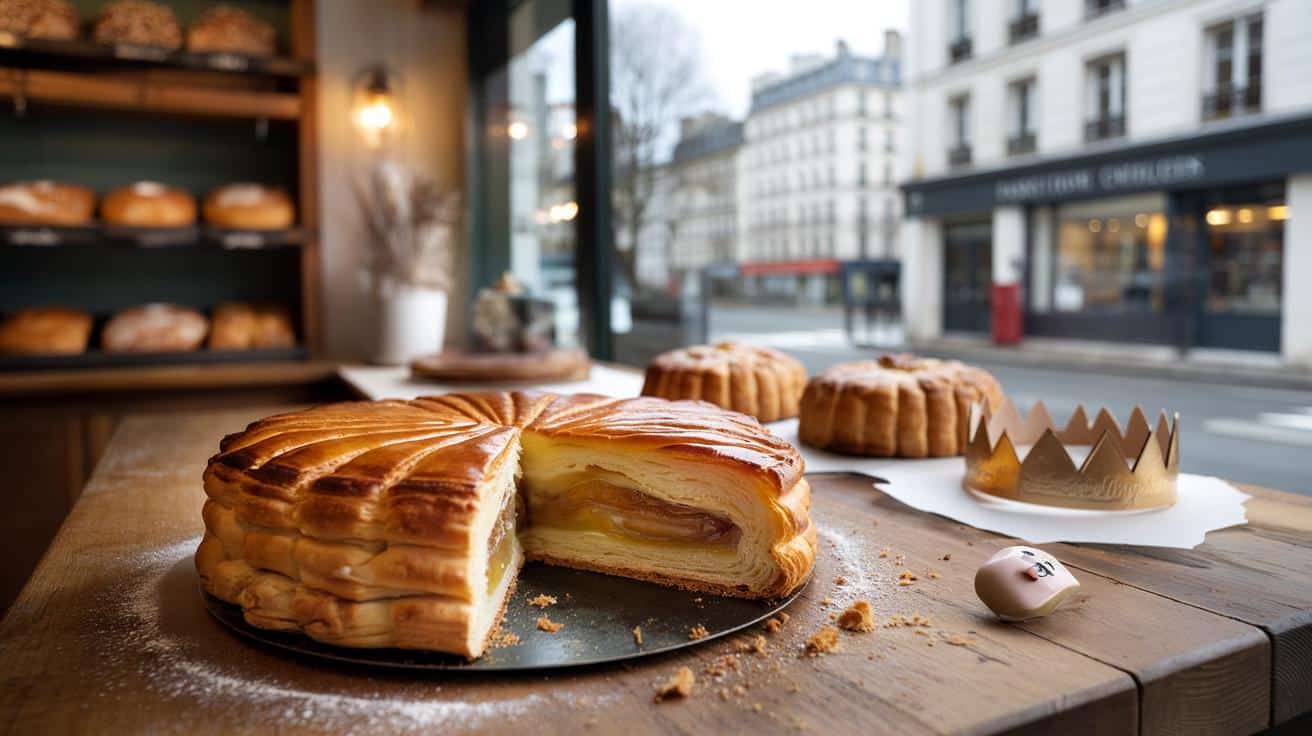
Perfectly laminated pastry on the outside, a lush almond-and-rum heart on the inside: that contrast earned Pleincœur’s galette the “galette of the year” title.
Far from the sugar-packed, overly rich versions that flood supermarket shelves in January, this one aims for clarity of flavour. Each bite delivers defined layers: airy pastry, fragrant frangipane, and a gentle warmth from rum that lifts the almonds instead of masking them.
Who is behind this “galette of the year”?
The name on the box is Pleincœur. The name behind the recipe is Maxime Frédéric, a star pastry chef best known for his work at Cheval Blanc Paris. He was named “Best Pastry Chef in the World 2025” by an international ranking, yet he has chosen a surprisingly modest stage for this galette.
Rather than limiting his work to five-star hotel guests, Frédéric signs this galette “with his family at heart”, partnering with a neighbourhood bakery to make a famously festive dessert feel both refined and accessible.
His approach is simple on paper, demanding in practice. He uses a Viennese-style puff pastry, rolled extremely thin to keep it light, then filled with a cream of almonds enriched with rum. The goal is to offer restaurant-level precision in a format families can pick up on their way home from work.
This is a chef used to palace kitchens, choosing instead to perfect a dessert that will sit on an ordinary family table.
➡️ Why these 8 fighter jets are seen as the ultimate weapons in the sky
➡️ Rheinmetall receives major order for HERO loitering munitions
➡️ US Space Command Taps SpaceX for Missile Warning, Tracking Satellites
➡️ Germany contracts Polaris to develop two-stage hypersonic test vehicle
➡️ Heating: the 19°C rule is over, here is the experts’ recommendation
A focus on ingredients, not gimmicks
Pleincœur and Frédéric’s team insist on quality over showmanship. They source butter from Normandy, a region prized in France for its rich, high-fat dairy, and use it generously in the dough for flavour and flaky lift. The almonds are selected for aroma, not just cost, and the rum brings a discreet, bakery-style roundness rather than a punchy, cocktail-like hit.
- Butter: from Normandy, for depth of flavour and texture
- Pastry: Viennese-style puff, thin and carefully laminated
- Filling: almond frangipane, scented with rum
- Style: classic recipe, tuned with chef-level precision
The result is a galette that looks traditional but feels unexpectedly controlled. No overflowing filling, no burnt edges, no claggy mouthfeel. Just a clean, confident execution.
Three galettes on offer, not just one
While the almond frangipane version has earned the “galette of the year” accolade, Pleincœur is not betting the whole season on a single recipe. The bakery offers a small range of three galettes for 2026, all built on the same carefully worked puff pastry, each with its own personality.
The almond-and-rum galette is the headline act, but two additional creations broaden the options for those who like to try new things during Epiphany. The idea is to keep one foot in tradition and one foot in modern pastry, without falling into gimmicks or overloaded toppings.
At Pleincœur, the Epiphany choice is simple: one award-winning classic, and two more daring cousins for those who like variety.
Why variety matters during Epiphany
In France, the galette des rois isn’t eaten just once. Families, offices and groups of friends often repeat the ritual several times across early January. Having more than one style on hand lets people rotate flavours and avoid boredom.
By building a trio of galettes on the same technical base – that light, Viennese puff pastry – Pleincœur maintains consistency while still letting the fillings change the experience. It’s a way to keep regulars coming back over the season, rather than treating the galette as a one-off purchase.
Where to try this “galette of the year”
The bakery behind the sensation is not hidden inside a hotel lobby or a luxury department store. Pleincœur is located at 64 rue des Batignolles, in the 17th arrondissement of Paris, a neighbourhood known more for families and cafés than for flashy pastry boutiques.
| Bakery | Address | Arrondissement | Opening hours |
|---|---|---|---|
| Pleincœur | 64 rue des Batignolles, 75017 Paris | 17th (Batignolles) | Monday–Sunday, 8:00–20:00 |
This wide opening window means locals can grab a galette early in the morning, swing by at lunch, or pick one up for a last-minute evening gathering. The atmosphere is that of a warm, local bakery, not an intimidating luxury shop.
For once, a critic’s favourite pastry is sold in a corner bakery with regular hours, not behind a concierge desk.
For visitors to Paris, the bakery is reachable by metro and sits near lively streets with bars and bistros, making it easy to combine a tasting with a wander through the neighbourhood.
What makes a truly great frangipane galette?
François-Régis Gaudry’s praise points to features that pastry fans can look for, whether in Paris or elsewhere. A standout galette often shares a few characteristics.
- A sharp, golden bake on the pastry, with visible layers
- No greasy feel on the fingers, despite generous butter
- Filling that spreads almost to the edge, without leaking
- A balanced sweetness, where almonds and butter lead the flavour
- An even thickness from slice to slice
Frangipane itself is worth clarifying. In classic French baking, it’s not just almond paste. It’s typically a mix of almond cream and pastry cream, giving it a lighter, creamier texture that bakes into a soft, moist layer rather than a dense block.
When it’s well made, the filling sets just enough to slice cleanly while still feeling smooth on the tongue. Rum or another spirit can be added in small amounts, not to dominate but to give the almonds a warmer, slightly aromatic edge.
How to enjoy a galette des rois at home
For readers thinking of making or serving their own galette, a few habits can make a big difference, even with a bakery-bought one.
- Reheat gently: ten minutes in a low oven restores the pastry’s crispness better than a microwave.
- Serve slightly warm: this helps the butter aromas and almond notes open up.
- Pair with drinks: black tea, coffee or a light sparkling wine all work well.
- Cut small slices: the richness means modest portions keep guests comfortable.
Then comes the fève, the little charm hidden in the filling. Traditionally ceramic or plastic, it’s baked into the galette. Whoever finds it in their slice becomes “king” or “queen” for the day and chooses someone to wear the paper crown that usually comes with the cake.
The game around the fève turns a simple pastry into a small social ritual, especially for children.
Some families let the youngest child hide under the table and call out names, deciding who gets each slice, to keep things fair and add drama. In offices, colleagues use the game to break the ice in early January, when the new year still feels tentative.
Why this matters beyond one Paris bakery
A neighbourhood galette earning the praise of a well-known critic says something about where pastry culture is heading. Rather than chasing ever more complex designs, many top chefs are returning to straightforward classics, aiming to perfect texture, ingredients and technical control.
For British or American readers visiting France, this trend means that the best experience might not always come from the most expensive address. A carefully made galette des rois in a local bakery – especially one like Pleincœur, backed by a serious pastry chef – can rival or surpass luxury counters at a fraction of the price.
It also offers a template for home bakers. Focusing on a clean puff pastry, a well-balanced almond filling and a careful bake can give better results than chasing extravagant decorations or multiplying flavours. Simplicity demands confidence, but it tends to age better than fashion-led twists.
For now, in the 17th arrondissement of Paris, that philosophy has produced a galette that has caught the eye – and appetite – of one of France’s most respected food voices, and turned a January tradition into a talking point weeks before Epiphany even arrives.